Theoretical Research Areas
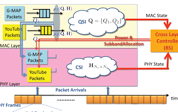
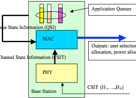
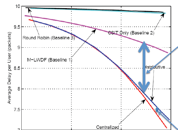
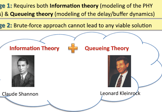
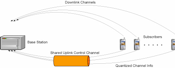
Cross-layer optimization refers to a resource optimization problem for wireless networks (such as OFDMA/SDMA/Relay...etc). By cross-layer design, we refer to a joint consideration of the PHY and the MAC (or other layer) in the resource allocation. This may refer to the joint consideration of PHY (such as power or data rate) and MAC parameters (such as user scheduling, random access) in the optimization variables. This may also refer to the joint consideration of PHY (throughput) and MAC (e.g. delay) performance in the optimization objective. General cross-layer optimization is an interesting and challenging problem. For instance, to capture the PHY dynamics, one has to rely on information theory and communication theory. On the other hand, to capture the delay dynamics, one has to rely on queueing theory. Integration of information theory and queueing theory is not easy and brute-force approach cannot be used to obtain useful solutions with insights. We consider delay-optimal resource control in different topologies such as the downlink and uplink of single-hop MIMO/OFDMA systems, multi-hop systems as well as adhoc network with random access. (details here)

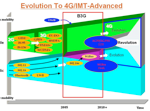
5G wireless networks brings a lot of new applications as well as challenges. In a nut shell, there is 1000X increase in capacity demand, 1000X increase in connectivity and 100X reduction of latency. These are very challenging demands which cannot be addressed by one single solution. A portfolio of solutions can be divided into (1) New Physical Layer Technologies, (2) New Radio Resource Management and (3) New Architecture.
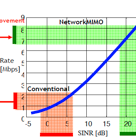
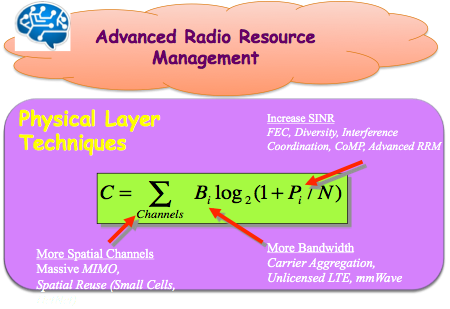
From very high level, if one looks at the Shannon’s capacity formula, there are only a limited number of parameters that can contribute to capacity increase. (a) Increasing number of spatial channels. There are various research topics on new techniques that can contribute directly and indirectly to increasing the number of spatial channels. For example, in massive MIMO, more spatial channels are created with massively many antennas at the base station using MIMO techniques. In small cell networks or heterogeneous networks, there are higher spatial reuse in a cellular network, which also contribute indirectly to more spatial channels.
Another possibility is to (b) increase the bandwidth in the Shannon’s capacity formula. There are various research topics that contribute to increase in bandwidth. For example, carrier aggregation techniques, cognitive radio techniques, unlicensed LTE systems and mmWave technologies can contribute to higher bandwidth.
A third possibility is to (c) increase the SINR in the Shannon’s capacity formula. Research topics such as advanced error correction codes, interference mitigation, Interference alignment, coordinated beamforming in cellular network, massive MIMO , CoMP (networked MIMO) and advanced radio resource management (RRM) all contribute to improving the SINR.
(I.1) New Physical Layer Technologies for 5G Wireless Systems
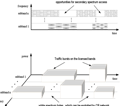
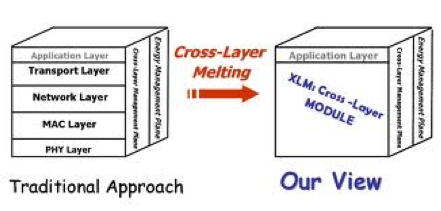
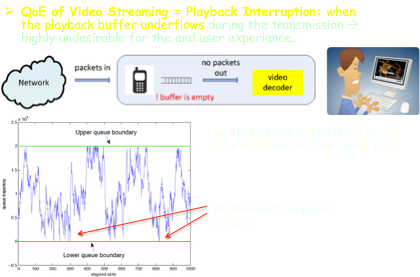
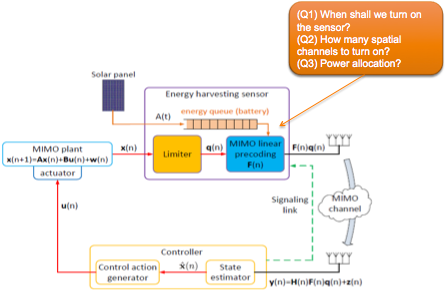
Typical radio resource management attempts to maximize the PHY performance regardless of the applications. The wireless communication network is to provide a transparent pipe without worrying about what specific application is using the pipe. This sometimes results in suboptimal designs for some niche applications. One can view the design of radio resource management as an optimization problem. For instance, the notion of “cross-layer” may refer to “crossing layers” in optimization variables such as the PHY variables: (MIMO precoders, transmit powers, rate adaptation), the MAC variables (user scheduling, subband allocation) and the Network Layer Variables (multi-hop route, admission control). The notion of cross-layer may also refer to “crossing-layers” in optimization objective(s) and constraint(s). For example, one can optimize the PHY performance (such as the sum capacity, throughput, proportional fairness) or the MAC performance (such as queue stability, average delay, delay jitter at the MAC queues) or most preferrable, the end-to-end application performance (such as video streaming playback interruption probability or the networked control stability.). To simplify the problems, one usually focus on optimizing the PHY performance, believing that the resulting end-to-end application will automatically perform good. Unfortunately, this turns out to be not the case for some applications. For example, in video streaming applications, it is not the bit rate or average delay that matters. It is the video playback interruption probability or buffer overflow probability that matters. Another example is the machine-to-machine communications for networked control applications. In this application, it is again not the bit rate nor average delay that matters. The goal is for sensors (machine nodes) to measure the system state and provide state feedback to the controller (closed-loop control) so as to stabilize an unstable dynamic system (such as a chemical plant). In this application, the RRM should be aware of the underlying application so as to optimize the wireless resource to complete the task (stabilization of industrial plant).
(I.2) New Radio Resource Management for 5G Wireless Systems
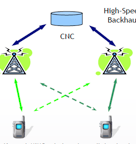
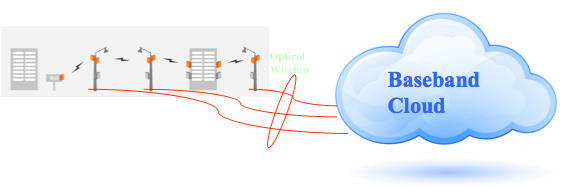
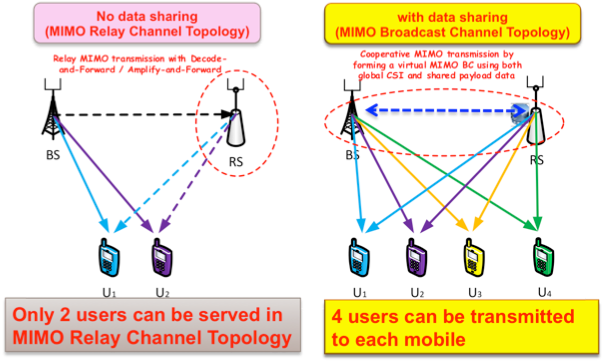
In addition to advanced PHY and RRM technologies, it is also important to have a holistic design to support the challenging demands for future 5G wireless systems. Several new architectures are explored to support future 5G wireless networks. One example is Cloud-Radio Access Networks (C-RAN). Different from traditional cellular networks, each base station in C-RAN is called a “remote radio head” (RRH) where it only performs simple RF processing. The IF or baseband samples are then quantized and transmit to the “baseband cloud” (BB-Cloud) for centralized base band processing. As such, it offers the advantage of small cell network and support high mobility because the notion of “cell” is not defined by the RRH coverage (but rather defined by the CoMP clustering boundary in the BB cloud). It also offers a lot of other advantages such as reducing interference (bring the transmitter closer to the mobile), more efficient interference mitigation (due to centralized processing) as well as virtualization of base station (soft base station). While the C-RAN offers a lot of potential new opportunities, there are also a lot of practical challenges that need to be addressed. Another new architecture we explore is called the PHY caching in wireless networks. Traditional wireless networks are designed to deliver raw information bits from the source to the destination. However, in practical scenarios, the wireless network should be designed to deliver contents. There is a subtle difference between random bits and content --- contents are cachable. A packet transmitted by this base station may be requested by other users in the near future. So, if the base station cache this packet, then the demand can be addressed from the cache without consuming the backhaul bandwidth. While cache has been widely explored in the internet and content distribution network (CDN) or peer-to-peer networks (P2P), the proposed PHY caching (our group is the first to propose PHY caching to induce MIMO cooperation opportunities) is fundamentally different from these conventional cache. In conventional cache, the benefit comes from reducing the number of hops from the source to the consumer as well as load-balancing. The underlying PHY of the links as well as the network topology is the same regardless of the cache state (hit or not hit). However, in the proposed PHY caching, the role of cache is to induce a favorable PHY topology (e.g. from unfavorable interference channel to more favorable broadcast channels). In other words, the underlaying PHY of the wireless network changes dynamically depending on the random cache state at the BS. As such, the PHY cacheing provide a new perspective of designing wireless networks. A lot of wireless network technologies (which was regarded as providing only marginal performance benefits) such as relay and adhoc network will offer substantial gains by introducing PHY caching.
(I.3) New Architecture for 5G Wireless Systems

Massive MIMO and Network MIMO

X. RAO, V. LAU “Distributed Fronthaul Compression and Signal Recovery in C-RAN”, IEEE Transactions on Signal Processing, 2014.
A. LIU, V. LAU, “Hierarchical Interference Migitation for Large MIMO Cellular Networks”, IEEE Transactions on Signal Processing, 2013
A. LIU, V.LAU “Phase-Only RF Precoding for Massive MIMO Systems with Limited RF Chains”, IEEE Transactions on Signal Processing, 2014.
RAO, V. LAU, “Distributed Compressive CSIT Estimation and Feedback for FDD Multiuser Massive MIMO Systems, IEEE Transactions on Signal Processing, 2014.
RAO, V. LAU, “Compressive Sensing with Prior Support Quality Information and Application to Massive MIMO Channel Estimation with Temporal Correlation”, IEEE Transactions on Signal Processing, 2015.
F. ZHUANG, V. LAU, “Backhaul Limited Asymmetric Cooperation for MIMO Cellular Networks via Semi-definite relaxation”, IEEE Transactions on Signal Processing, 2014
J. Chen, V. LAU, “Two-Tier Precoding for FDD Multi-cell Massive MIMO Time-varying Interference Networks”, IEEE Journal of Selected Areas on Communications (JSAC), vo. 32, no. 6, pp 1230-1238, 2014.
-
J.Chen, V. LAU, “Multi-stream iterative SVD for massive MIMO communication systems under time varying channels”, ICASP 2014.
Y. Chen, V. LAU, Y. Long, “A scalable limited feedback design for network MIMO using per-cell codebook”, vol. 9, no.10, pp 3093--3099, IEEE Transactions on Wireless Communications, 2010.

Sparse, Hierarchical Interference Mitigation

A. LIU, V. LAU, “Joint Interference Mitigation and Data Recovery in Compressive Domain: A sparse MLE Approach”, IEEE Transactions on Signal Processing, vol.62, no.9, pp 5184--5195, 2014
A. LIU, V. LAU, “Hierarchical Interference Migitation for Large MIMO Cellular Networks”, IEEE Transactions on Signal Processing, 2013
-
X.RAO, V. LAU, “Minimization of CSI Feedback Dimension for Interference Alignment in MIMO Interference Multicast Networks, IEEE Transactions on Information Theory, vol. 61, no.3, pp 1218-1246, 2015.
-
L.RUAN, V. LAU, MZ Win “Generalized Interference Alignment - Part I: Theoretical Framework”, IEEE Transactions on Signal Processing, 2015.
L. RUAN, V. LAU, MZ Win, “Generalized Interference Alignment- Part II: Application to Wireless Secrecy, IEEE Transactions on Signal Processing, 2015.
L. RUAN, V. LAU, MZ Win, “The feasibility conditions for interference alignment in MIMO networks”, IEEE Transactions on Signal Processing, vo. 61, no. 5, pp 2066-2077, 2013.
L. RUAN, X. RAO, V. LAU, “Interference Alignment for Partially Connected MIMO Cellular Networks”, IEEE Transctions on Signal Processing, vol 60, no. 7, pp 3692--3701, 2012.
RAO, L. RUAN, V. LAU, “Limited Feedback Design for Interference Alignment on MIMO interference networks with heterogeneous path loss and spatial correlations”, vol 61, no. 10, pp. 2598--2607, IEEE Transactions on Signal Processing, 2013.
Huang, V. LAU, “Partial Interference Alignment for K User MIMO Interference Channels”, IEEE Transactions on Signal Processing, vol. 59, no. 10, pp 4900--4908, 2011.
Huang, V. LAU, “Robust Lattice Alignment for K-User MIMO Interference Channels with Imperfect Channel Knowledge”, vol. 59, no. 7, pp 3315--3325, IEEE Transactions on Signal Processing, 2011.
K. Huang, V. LAU, D. Kim, “Stochastic Control of Event-driven feedback in multiantenna interference channels”, vol. 59, no. 12, pp. 6112--6126, IEEE Transactions on Signal Processing, 2011.
(I) Research on Next Generation 5G Wireless Systems (2015)

QoE-Aware RRM for Video Streaming

V. LAU, F. ZHANG “Optimal Beamforming for Video Streaming in Multi-Antenna Interference Network via Diffusion Limit”, IEEE Transactions on Information Theory, vol. 61, no. 4, pp1819 – 1841, April, 2015.
F. ZHANG, V. LAU, “Cross-Layer MIMO Transceiver Optimization for Multimedia Streaming in Interference Networks”, IEEE Transactions on Signal Processing, vol. 62, no. 5, pp 1235—1245, 2014.

QoE-Aware RRM for Networked Control Systems

J. Wu, Y. Li, V. LAU, L. Shi “Data-driven power control for state estimation: A Bayesian inference approach”, Automatica, Vol. 54, pp 332 – 339, Mar, 2015.
F. ZHANG, V. LAU, “Networked Control Systems over Correlated Wireless Fading Channels”, IEEE Transactions on Automatic Control, under revision, 2015
V. LAU, F. ZHANG, “MIMO Amplify and Forward Precoding for Networked Control Systems, IEEE Transactions on Automatic Control, under revision, 2015

Delay-Aware RRM for Wireless Systems

Y. CUI, V LAU, E. Yeh, “Delay-Optimal Buffered Decode-and-Forward for Two-Hop Networks with Random Link Connectivity”, IEEE Transactions on Information Theory, vol. 61, no.1, pp. 404--425, 2015.
ZHANG, V. LAU, “Closed-form delay-optimal power control for energy harvesting wireless systems with finite energy storage”, IEEE Transactions on Signal Processing, Vol. 62, pp 5706 – 5715, 2014.
W. WANG, F. ZHANG, VLAU, “Dynamic Power Control for Delay-Aware Device-to-Device Communications”, IEEE Journal of Selected Areas on Communications (JSAC), vol. 63, no. 1, pp 57-69, 2015.
W. WANG, V. LAU, “Delay-Aware cross-layer device-to-device communications in future cellular systems”, IEEE Communication Magazine, 2014
Wang, V. LAU, “Delay-Optimal Two-Hop Cooperative Relay Communications via Approximate MDP and Stochastic Learning”, IEEE Transactions on Information Theory, vol. 59, no. 11, pp 7645-7670, 2015.
J. Chen, V. LAU, “Large Deviation Delay Analysis of Queue-Aware Multi-user MIMO Systems with two timescale mobile-driven feedback”, IEEE Transactions on Signal Processing, vol. 61, no. 15, pp 4067--4076, Aug 2013.
F. ZHANG, V. LAU, “Low Complexity Delay-Constrained Beamforming for Multi-user MIMO Systems with Imperfect CSIT”, IEEE Transactions on Signal Processing, 2013.
K. HUANG, V. LAU, “Stability and Delay of Zero-forcing SDMA with Limited Feedback”, IEEE Transactions on Information Theory, vol. 58, no. 10, pp 6499-6514, 2012.
Y. Cui, V. LAU, “A survey on Delay-Aware resource control for wireless systems - Large deviation theory, stochastic Lyapunov drift and distributed stochastic learning”. IEEE transactions on information theory, vol. 58, no. 3, pp 1677-1701, 2012. .

PHY Caching for Wireless Networks

W. HAN, A. LIU, V LAU, “Degrees of Freedom of Cached MIMO Relay Channels”, IEEE Transactions on Signal Processing, vol. 63, no.15, pp. 3986--3997, 2015.
A. LIU, V. LAU, “Exploiting Base Station Caching in MIMO Cellular Networks - Opportunistic Cooperation for Video Streaming” , IEEE Transactions on Signal Processing, 2014.
A LIU, V. LAU, “Cache-Enabled Opportunistic Cooperative MIMO for Video Streaming in Wireless Systems”, IEEE Transactions on Signal Processing, vol. 62, no. 2, pp 390-402, Jan 2015.
A. LIU, V. LAU, “Mixed Timescale Precoding and Cache Control in Cached MIMO Interference Networks”, IEEE Transactions on Signal Processing, vol. 61, no. 2, pp 6320-6332, Sept 2013.

Energy Harvesting Wireless Systems

K. HUANG, V LAU, “Enabling Wireless Power Transfer in Cellular Networks: Architecture, Modeling and Deployment”, IEEE Transactions on Wireless Communications, vol. 13, no.2, pp. 902--912, 2014.
Y.CUI, V. LAU, “Grid Power-Delay Tradeoff for Energy Harvesting Wireless Communication Systems with Finite Renewable Energy Storage” , IEEE Journals of Selected Areas on Communications (JSAC), 2015.
ZHANG, V. LAU, “Closed-form delay-optimal power control for energy harvesting wireless systems with finite energy storage”, IEEE Transactions on Signal Processing, Vol. 62, pp 5706 – 5715, 2014.
H. HUANG, V. LAU, “Decentralized delay optimal control for interference networks with limited renewable energy storage”, IEEE Transactions on Signal Processing, vol. 60, no. 5, pp 2552-2561, 2012.
Ying Cui, V. K. N. Lau and Y. Wu, “Delay-Aware BS Discontinuous Transmission Control and User Scheduling for Energy Harvesting Downlink Coordinated MIMO Systems,” IEEE Transactions on Signal Processing, vol. 60, no. 7, pp. 5196-5205, Jul. 2012.

Cloud Radio Access Networks (C-RAN)

X. RAO, V LAU, “Distributed Fronthaul Compression and Joint Signal Recovery in Cloud-RAN”, IEEE Transactions on Signal Processing, 2014.
K. HUANG, V. LAU, “Communications using Ubiquitous Antennas: Free-Space Propagation” , IEEE Transactions on Signal Processing, 2015.
A LIU, V. LAU, “Joint Power and Antenna Selection Optimization in Large Cloud Radio Access Networks”, IEEE Transactions on Signal Processing, vol. 62, no. 5, pp 1319-1328, Jan 2013.
S. LIU, J. Wu, CH Koh, V. LAU, “A 25Gb/s/km2 urban wireless network beyond IMT-advanced”, IEEE Communication Magazine, vol. 49, no. 2, pp 122-129, 2011.